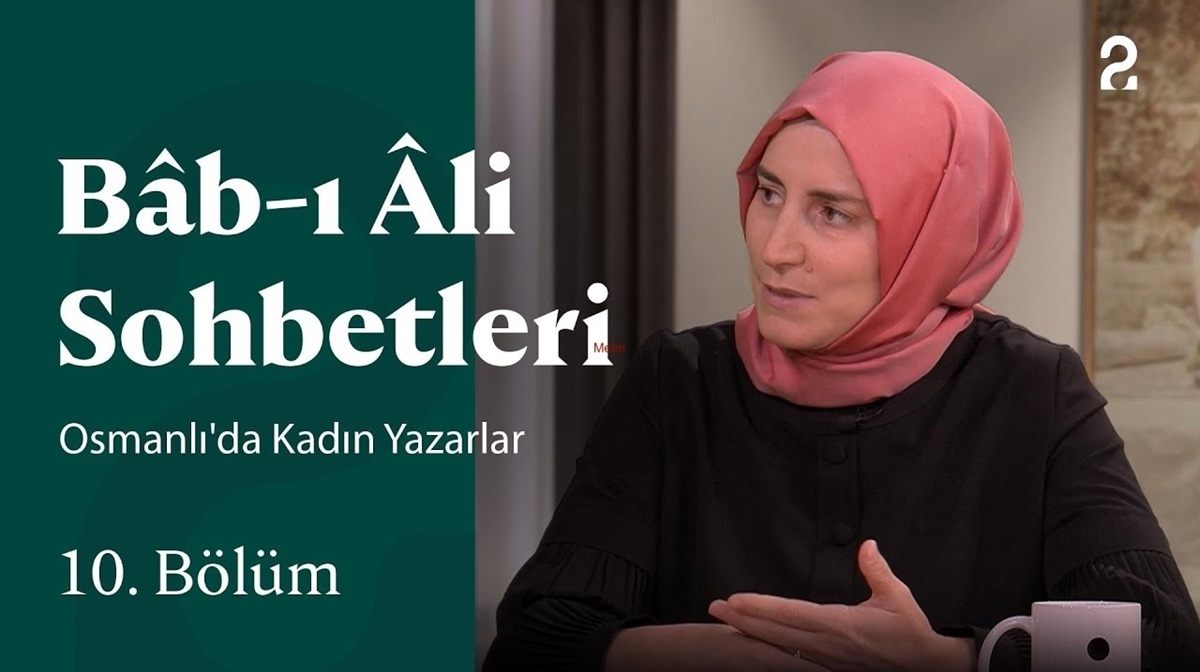
Assist. Prof. Emine Hoşoğlu Doğan, Head of the Department of Comparative Literature at Ibn Haldun University, was a guest on the TRT 2 program Bab-ı Âli Sohbetleri. In the episode broadcast on Monday, December 15, Assist. Prof. Hoşoğlu Doğan discussed the position of women during the Ottoman modernization process, addressing the topic through its historical, political, and social dimensions.
During the programme, Assist. Prof. Hoşoğlu Doğan emphasized that the Ottoman women’s movement should not be understood solely as a struggle for rights, but rather as an integral part of the reconstruction of the state and the transformation of the concept of citizenship. She noted that, unlike Western women’s movements grounded in autonomous civil society initiatives, the Ottoman women’s movement developed in close connection with concerns over state survival and the need for institutional reform. Assist. Prof. Hoşoğlu Doğan highlighted that this period marked the first time in Ottoman history that women were conceptualized as citizens alongside men, in areas ranging from education to the use of public space. She underlined that women’s education, from the rüşdiye schools to the Darülfünun, was viewed not merely as a matter of individual advancement, but as a strategic investment in social transformation and the future of the state.
One of the key themes discussed in the programme was the intellectual debates conducted by women in the mainstream press of the period. Assist. Prof. Hoşoğlu Doğan explained that women writers publishing in newspapers such as Tanin and Tercüman-ı Hakikat did not confine themselves to so-called women’s issues, but instead engaged directly in intellectual debates with male intellectuals. She noted that figures such as Halide Edip Adıvar and Fatma Aliye cultivated a confident culture of responding to hegemonic discourse on issues such as polygamy and education, making use of both conservative and modern platforms. She emphasized that this process was shaped by a dynamic balance of conflict and cooperation.
Assist. Prof. Hoşoğlu Doğan also pointed out that Ottoman women’s pursuit of rights began with practical and everyday public demands, such as improvements to seating arrangements on ferries, rather than abstract claims. She emphasized that the press functioned as a crucial platform for rights advocacy during this period. According to her, women writers sought to maintain a delicate balance between religious identity and aspirations toward contemporary civilization, bringing a wide range of issues, from the form of veiling to access to university education, into public debate along this axis.
At the conclusion of the programme, Assist. Prof. Emine Hoşoğlu Doğan drew attention to the significance of the Women’s Library and Information Centre Foundation, stressing that the long-neglected history of women can only be completed through the incorporation of such archives into academic research, including theses and digital projects.
To watch the program: https://youtu.be/lqxR_vEmnCQ?si=xVjFnuOFk2UEQBhq